Closed Doors, Clear Boundaries: The Doorstep Script for Dark Nights and Late Parcels
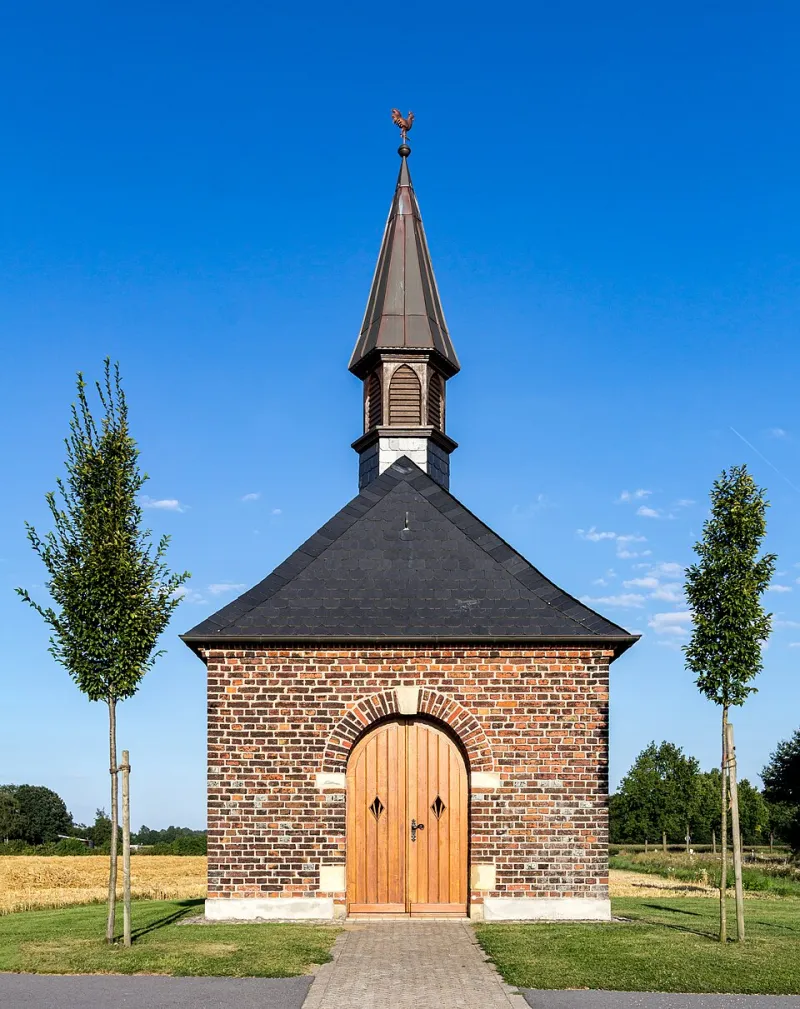
Photo: Dietmar Rabich, CC BY-SA 4.0, via Wikimedia Commons
Here's an unpopular opinion to carry into the darker months: you are not obliged to answer your front door.
I know how it lands. There's a particular reflex in this country that says answering the door is basic manners, that a knock is a social contract, that ignoring one makes you the strange one on the street. But somewhere between the parcel rush and the five o'clock sunset, we've quietly decided that anyone who fancies a knock gets a look at our hallway. I don't think that's manners. I think it's a habit we've never examined.
The blind spot nobody drills
We're good at the walk home now. We know about headphones, about the lit route, about texting a friend when we're in. But the doorstep gets almost no airtime, and it's arguably where more women feel most exposed: no coat, no shoes, keys still in the lock, phone on the sofa, and a single pane of glass between you and someone whose face you can't quite see in the dark.
You are also, in that moment, at home. Which means you're relaxed, and being relaxed is precisely the state that doorstep callers are counting on.
Change the default, not the person
The whole trick is to stop treating each knock as a decision and start treating it as a category. My default is simple: if I'm not expecting you, I'm not opening the door. Not because you're dangerous — because I don't know whether you are, and at 7pm in November in a dressing gown is not the moment I want to find out.
Rehearsed defaults beat in-the-moment judgment every time. Ask anyone who's ever had to think on their feet at a door and they'll tell you the same thing: the gap between 'hello?' and 'oh, go on then' is about four seconds, and urgency is the lever.
The script, said through a closed door
You don't need a speech. You need four sentences you've said out loud once, so they don't come out as a question.
- 'Who is it?' — light on, chain on, door still shut.
- 'I'm not opening the door, sorry — I'm not expecting anyone.'
- 'You can leave it on the step, thanks.'
- 'I'll ring the company myself and check.'
And for someone claiming to need help: 'I'm not able to let you in, but I'll call 999 for you from here.'
Say it through the door, not through a six-inch gap. Apologise once at most — the second sentence is the boundary, and the 'sorry' is just the polite wrapping. If it helps, remember that 'no' is a complete sentence and you are not required to justify it to a stranger.
What bogus callers actually rely on
Distraction burglary is a small, unglamorous, surprisingly effective crime, and the method barely changes. Someone at the front door claims to be from the water board, the council, a utility company, or 'a neighbour from number forty-two'. There's an urgent leak, a problem with the supply, a fence that needs checking.
The tell is always the same: they want you to step away from your own door, or they want you to feel rushed. Sometimes there's a second person who goes round the back the moment you're occupied at the front.
The counter-move is boring and it works. Verify by calling the organisation on a number you've looked up yourself — never the one on the card they've handed you. Genuine callers expect this and will happily wait on the step for four minutes. The ones who won't wait are telling you something.
Set the house up so the decision is already made
- Use the chain or door limiter every time, including for two-minute calls.
- Keep keys out of the lock and away from the door — letterbox fishing and lock snapping are real.
- If the front door's open, the back door's locked.
- Porch light on, ideally motion-sensor, plus a timer on a front room lamp so the house never looks empty.
- A video doorbell if you can stretch to one. Being able to talk to a screen instead of a person is genuinely confidence-changing.
- A 'no cold callers' sticker. Dull, effective, and it gives you a line to point at.
- A nominated safe place set in every courier app you use, so half of these knocks never happen at all.
The scenario that actually worries me
Not the parcel. It's arriving home with someone behind you.
If you clock someone matching your pace as you turn into your road, don't go in. Keep walking to a lit house with a car outside, knock, and ask them to call 999 — most people will help, and you're asking them for a phone, not a rescue. If you're already inside and something feels wrong, lock up, leave the lights on, and ring. And no matter how reasonable the voice through the letterbox sounds, 'I just need to talk to you' is not a reason to open a door.
A quick word about the parcel rush
From late November the knocks get later, more frequent and more plausible — a courier at half nine at night, a 'wrong address', a neighbour you've never met asking to take something in. Put a note on the door: 'Parcels: please leave in the porch. I won't be answering.' It reads as a delivery instruction, which it is, and it quietly removes you from the transaction.
Practise it once, tonight
Stand in your hallway and say the four lines out loud. It'll feel ridiculous for about eleven seconds, and then it won't. Confidence at the door isn't the absence of nerves — it's knowing exactly what your next sentence is before anyone knocks.