Grip, Not Guesswork: Winter Shoes That Keep Your Exit Realistic
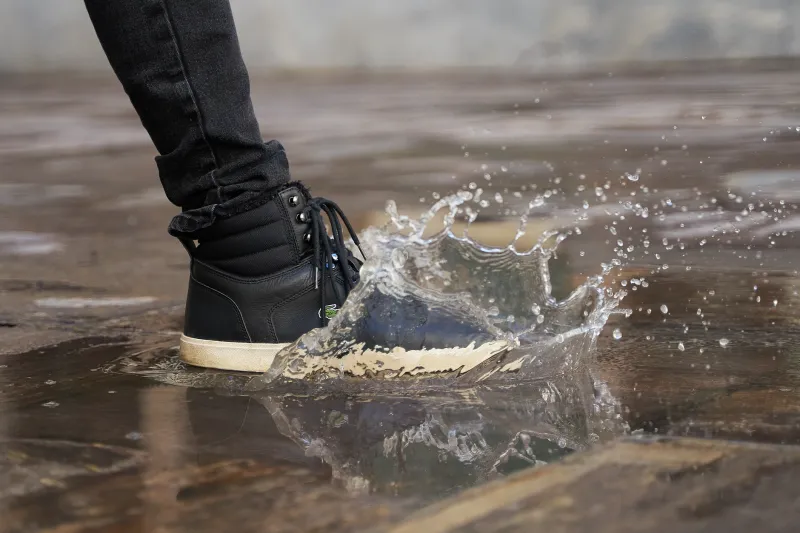
There is a particular kind of UK winter optimism that says: it will be fine. The pavements will not be slick, the car park will not be a skating rink, and the quick walk from the station will not turn into a balance exercise. Then December arrives, the ground goes shiny, and you find yourself mincing across wet cobbles in shoes that were chosen for a photograph, not a getaway.
This is not a lecture about wearing sensible shoes. Nobody needs to be told that heels are less practical than trainers. The point is more useful than that: footwear changes how you move, how fast you can react, and how confident you feel when the pavement is dark and the exit is not quite where you thought it was. Think of it as self-defence kit you are already wearing.
Why shoes matter more than they look
Self-defence is not only about what you would do if something happened. It is also about removing unnecessary friction before anything does. Good footwear gives you grip, stability and the option to move quickly without turning an ankle. Bad footwear makes every step a small negotiation.
On wet UK pavements, the enemy is rarely a dramatic fall. It is the half-second of uncertainty: the heel that skids on a painted crossing, the smooth sole that loses contact on a station stair, the boot that grips mud beautifully but slides on ice. That uncertainty slows you down. Sometimes that is fine. Sometimes you want the option to cross a road, change direction or get to a lit doorway without doing a comedy skid.
The four usual suspects
Heeled boots
Heeled boots are not automatically a bad choice. A block heel with a rubber sole and a decent tread can handle a lot. A narrow stiletto on wet stone is a different story. The questions are simple: how small is the contact point, how slick is the sole, and how well does the boot hold your ankle?
If you are wearing heels, shorten your stride and keep your weight over your feet rather than leaning forward. Avoid the shortcut across uneven paving. If the night is going to involve a long walk, a dark car park or a station with stairs, either change shoes or make the route match the footwear. A taxi isn't defeat. It's planning.
Smooth-soled fashion shoes
Leather soles and hard fashion soles look lovely and behave appallingly on wet surfaces. They are especially tricky on painted lines, metal drain covers, polished station floors and the smooth concrete of multi-storey car parks. If you can feel the sole sliding under your thumb, it will slide under your foot.
You can improve some shoes with stick-on grip pads, but don't overestimate them. A better trick is to treat smooth soles as indoor shoes with a short outdoor life. Carry them if you must, change at the venue, and wear something with actual tread for the journey.
Chunky trainers
This is usually the strongest winter option, but not all chunky trainers are equal. Look at the tread: if the pattern is worn flat in the middle, you are wearing a fashion shoe with a trainer shape. A deep, flexible tread is better on wet leaves and light ice. Too much platform can make you feel unstable on uneven ground, and long laces in the dark are their own small hazard.
Trainers also tend to be quieter and easier to run in. That matters. If you ever need to move quickly, you want a shoe that lets you do it without thinking about your ankles.
Wellies
Wellies are brilliant for mud, slush and flooded pavements. They are less brilliant for ice, stairs and anything requiring ankle support. A loose welly can slip off at the wrong moment, and the tread is not always designed for urban ice. Wear them for the walk that needs them, not for the whole night. If you are driving, remember that thick soles and wet pedals are a poor combination.
The 30-second footwear check
Do this before you leave, not in the dark outside the venue.
- Twist test. Stand on a hard floor and twist each foot gently. If the sole spins easily, it will do the same on wet paving.
- Toe flex. Bend the shoe at the ball of the foot. It should flex without collapsing. Stiff soles are tiring; floppy soles are unpredictable.
- Heel hold. Walk a few steps and check your heel isn't lifting out of the back. A loose shoe makes you grip with your toes, which slows you down.
- Quick-step. Take five brisk paces. If you feel wobbly, your body already knows. Believe it.
- Sole inspection. Look at the tread. Worn smooth in the middle? Time for a different pair.
When the outfit wins
Sometimes the shoes are the point. A Christmas do, a birthday, a wedding, a night out that has been planned for weeks. Fine. Make a backup plan instead of pretending the ground will be dry.
Carry foldable flats if your bag allows. Keep a pair of grippy shoes at your desk or in the car. Book the taxi for the whole journey rather than the last ten minutes. Choose the route with streetlights and handrails. Walk slower and wider, not faster and tighter. If you are in heels and the ground turns nasty, link arms with a friend, use the rail on the stairs, and don't be embarrassed to take the long way round.
And if you do have to move quickly, don't try to sprint in shoes that were never built for it. Get to safety at a fast walk, shout, use your voice, find people and light. The best exit is the one you can actually make.
Confidence is knowing your traction
There is a myth that confidence looks like striding through a dark car park in impractical shoes without a care. Real confidence is quieter than that. It is knowing your soles have grip, your route makes sense, and you have a plan for the bits of winter that don't cooperate.
So before you head out, give your shoes a second look. Not because you are afraid of the world, but because you have better things to do than negotiate with a wet paving slab.