Space to Breathe: Claiming Your Metre on a Packed High Street
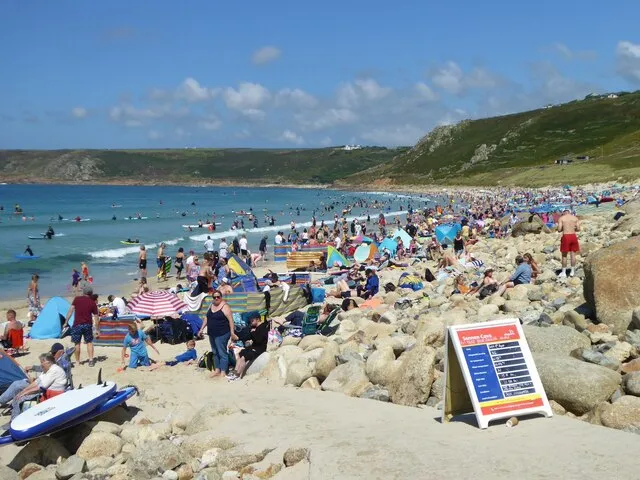
Photo: Rod Allday , CC BY-SA 2.0, via Wikimedia Commons
November high streets are their own sport. Lights go up, queues stretch out of shops, and suddenly everyone is walking at you with a phone in one hand and a bag in the other. The one-metre rule is not a magic force field. It is a rehearsal: a way of noticing your space early enough to keep it, without turning a busy Saturday into a confrontation.
What the one-metre rule actually means
Think of one metre as a working buffer, not a legal measurement. It is roughly an adult arm plus a shopping bag. On a pavement, in a queue, or on a bus, that gap gives you time to turn, speak, or step aside before someone is right on top of you. You are not asking strangers to respect a chalk circle. You are giving yourself a head start.
Start by noticing where your buffer disappears. Is it the queue at the till? The bus shelter? The narrow bit of pavement outside the bank? Most of us have three or four pinch points on our regular high street. You do not need to fix all of them. Pick one and rehearse it.
Feet first, voice second
Body positioning does more work than a speech. If someone drifts into your space, turn your body slightly side-on rather than squaring up. Let your leading shoulder point towards the gap you want to keep. Keep your feet hip-width apart and one foot a little back, so you are stable but not planted like a statue. A shopping bag held in front of you can be a practical barrier, not a weapon. It also gives your hands something to do.
In a queue, try standing at a slight angle rather than face-on to the person in front. You can still shuffle forward, but you are not offering your full back or your full front to the crowd. If you are waiting at a bus stop, stand to the side of the shelter rather than in the middle of the pavement. You will see more and block less.
Short cues that do not start a fight
The goal is a sentence that is boring enough to obey. Try: 'Could I have a bit of room, please?' Then pause. Do not fill the silence with an apology. 'I am just going to stand here' works well in a queue. 'I will wait over here' is useful when someone crowds you at a counter. Say it at normal volume, looking at the person's shoulder rather than glaring into their eyes. You are not performing confidence. You are giving information.
Practise the lines at home, in the mirror or on a quiet walk. Say them once in your normal voice, once a little louder, once with a flat tone. The first time you use one in public, it may come out squeaky. That still counts. The point is that your voice has a route out before your heart rate has a vote.
Queues, buses and tight exits
Crowded transport is where the one-metre rule needs adapting. On a busy train, you may not get a metre. Aim for the best available buffer and keep your hands up at chest height rather than pinned by your sides. If someone is pressing in, turn to face them slightly and use a short cue. If the carriage feels wrong, move. Getting off at the next stop or walking to another carriage is not overreacting. It is using the exits you have.
At shop doors and station stairs, do not stop dead in the flow. Step to the side, scan the space, then move. If you are leaving a crowded shop, let the doorway clear before you turn into it. Tight exits are where people bunch up and where tempers flare. A small pause costs you two seconds and gives you a clear look at who is around you.
The 60-second rehearsal
At home, measure roughly one metre with a tape or a couple of big steps. Stand in the middle. Have someone walk towards you slowly, or imagine it. When they reach the edge of your buffer, turn side-on, take a small step back, and say your line. Do that five times. Then try it with your bag in your hand. Then try it with your phone away. The drill is not about winning. It is about making the sequence familiar.
When the space is not there
Some places simply do not allow a metre. A packed Tube at 8am, a Christmas market, a gig queue. In those moments, lower your target. Keep your hands free, keep your bag close, and keep moving towards the edge of the crowd rather than the middle. Use staff if you need to. Ask the bus driver to wait while you find a seat. Leave the shop and come back. The one-metre rule is a habit, not a hostage situation. You are allowed to change the plan.
Confidence on a high street is not a loud personality. It is a bit of space, a short sentence, and feet that know where the exit is.