The Loaded Carry: Self-Defence When Your Hands Are Full of Shopping
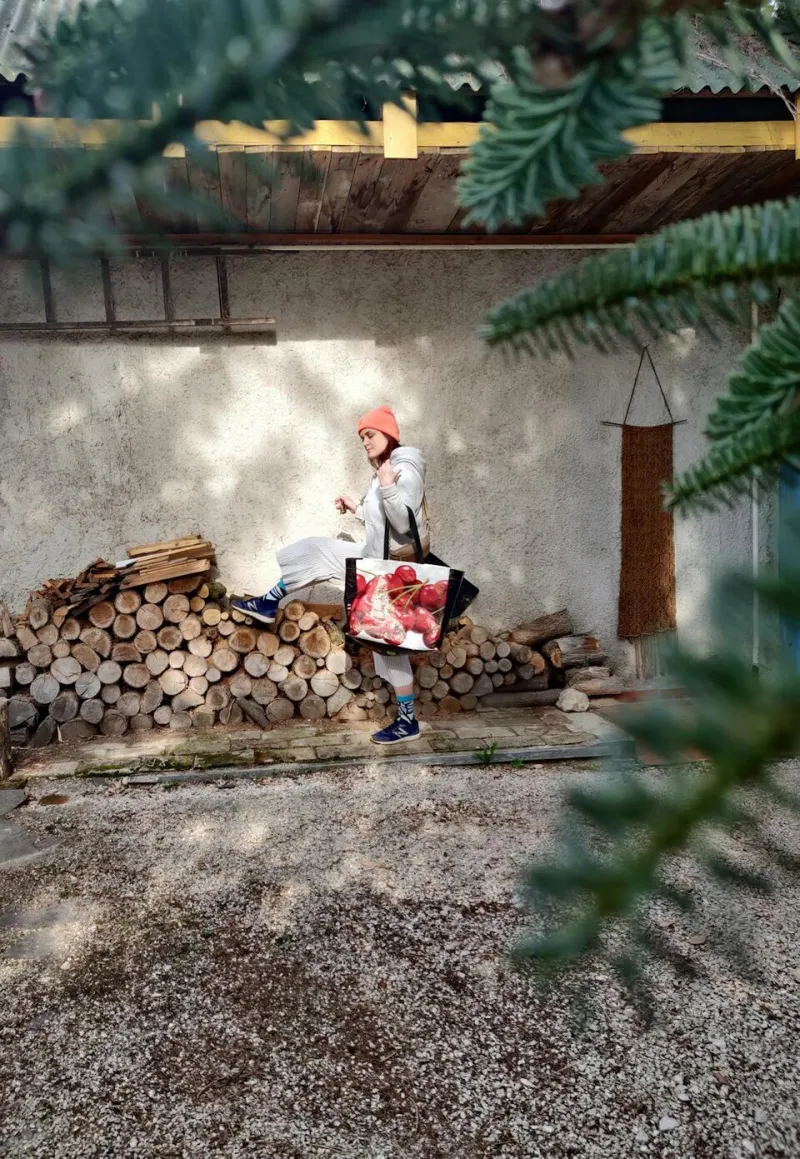
Photo: Siwit164, CC0, via Wikimedia Commons
Most self-defence advice assumes you arrive in leggings, trainers and a mood. Real life is less tidy. You're coming out of Tesco with two bags cutting into your fingers, a coffee in the other hand, a phone clamped between your ear and shoulder, and a bus to catch. That's the loaded carry: the ordinary state of having more stuff than hands. And it deserves its own plan.
At Her Defence, the class work still matters. But the skills that help on a dark pavement are often smaller and more boring than a full stance. They're about buying seconds, creating space and giving yourself an exit. Here's how to do that when your hands are full.
The stance you won't be using
A self-defence class might teach you a bladed stance, hands up, weight ready. Brilliant in the room. Not so brilliant when one hand is holding a pram handle and the other is stopping a bag of potatoes from splitting on the pavement.
The goal isn't to fight from a loaded position. It's to avoid needing to. If you have one free hand, use it for distance and voice. If you have no free hands, use your body angle, your voice and whatever solid object is already between you and someone else. You are not trying to win a round. You are trying to get home.
Distance is the real luxury item
The first defence is space. Not a punch, not a key between your fingers, not a clever line. Space. If someone can touch you, they are too close. If they are close enough to chat but you didn't invite it, that's still a distance problem.
On a high street, that might mean stepping back from the bus stop crowd, turning side-on at the cashpoint, or keeping your trolley between you and the person who has decided to tell you his life story by the cereal aisle. A body's length is better than a punch's length. If someone closes that gap, you don't have to stand still and be polite. Step back. Turn your shoulder. Put the trolley, the pram or a bag in the space between you.
This isn't about being rude. It's about being realistic. A metre of pavement is worth more than a perfect technique you can't use because your hands are full.
Your shopping is a barrier, not a weapon
A tote bag held in front of you can create a temporary buffer. A trolley is genuinely excellent: it's wide, it's on wheels, and it already belongs in the supermarket. A pram, with the brake on, can do the same job. None of these are weapons, and they shouldn't be swung about. A bag swung at someone off-balances you, escalates things and is unlikely to help.
Think shield, not flail. The point is to put something between you and them, then move. A coffee cup is not a weapon either. Don't throw it. Don't rely on an umbrella as a sword. The everyday items in your hands are there to create a pause, not a fight scene.
Voice first, volume second
Your voice is free, legal and always with you. Start calm and clear. 'I'm fine, thanks.' 'No, I don't need help.' If someone keeps closing in, name the behaviour: 'Stop there, please. You're too close.' If they still don't stop, go loud: 'Help! I need help here!'
Short phrases work better than speeches. Don't debate, explain or apologise. A flat, firm tone is often more useful than a shout, but volume is a tool: it attracts attention and makes you a less appealing target. Practise the lines before you need them. A voice that has said the words before is easier to find when your heart is going.
Three drills for ordinary days
Drill 1: The threshold reset
Before you leave the shop, stop just inside the door or just outside it, out of the flow of people. Shift your bags to one side if you can. Put your phone in your pocket. Free one hand. Spend twenty seconds scanning the car park, the bus stop or the street. Choose your route. Then move.
At home, practise gathering your bags with one hand deliberately free. At the supermarket, use the trolley to get everything to the car or the loading area, then do the reset before you walk. It's a small pause that stops you stepping out on autopilot.
Drill 2: The bag buffer
At home, with a friend, hold two bags and have them walk towards you at normal speed. Step back, turn side-on, bring a bag or a chair between you, and say: 'Stop there, please.' Do it three times. It feels awkward. Good. Awkward is what you want to rehearse.
On the high street, practise it in low-stakes moments. If someone queues too close at the bus stop, step forward, turn slightly and say: 'I need a bit of space, thanks.' You are not making a scene. You are practising a boundary with your body and your voice at the same time.
Drill 3: The voice loop
In a parked car or at home, rehearse three lines: 'No thanks, I'm fine.' 'Stop there, please.' 'Help! I need help here!' Start at normal volume, then project. On a supermarket run, use a clear 'No thank you' when someone offers unwanted help with your packing. It doesn't have to be a confrontation. It's a rep.
The pram and the parcel problem
A pram is a brilliant barrier and a terrible anchor. If someone approaches, stop, put the brake on, turn the pram so it sits between you, and use your voice. Don't balance a coffee on the handle and don't let someone 'help' you lift it if you didn't ask. With parcels, the same rule applies: don't open the door with your hands full. Put the parcel down inside, check the doorstep, then step out if you need to.
What this isn't
This isn't victim-blaming, and it isn't a guarantee. No plan is. It's a way of reducing risk and buying choices. If you have to drop your shopping, drop it. Bags are replaceable. If you can step back into a shop, do that. Ask staff to walk you to the car park if it feels off. Use the loaded carry as a reason to pause, not a reason to panic.
Practise in the ordinary moments: the checkout, the bus stop, the walk to the car. Free one hand where you can. Keep a body's length where you can. Let your voice do the first job. That's the plan when your hands are full.