When the Timetable Is the Only Exit: Building a Rural Night Plan That Holds
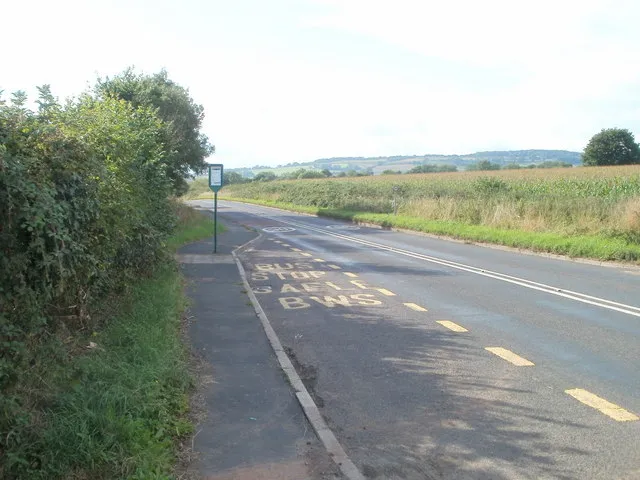
Photo: Jaggery , CC BY-SA 2.0, via Wikimedia Commons
City safety advice assumes options. Another bus in ten minutes. A taxi on the app. A brightly lit main road with people on it. Take all that away and the advice doesn't collapse — it just needs rewriting around a single fact: the timetable is your exit, and there is no second one tonight.
That's not a reason to stay in. It is a reason to train the specifics, the way you'd train any other skill. These are the drills worth rehearsing until they're automatic.
Learn the last three, not the last one
Everyone knows their last bus. Almost nobody knows the one before it. That gap is where problems live.
Sit down once with the operator's app — and screenshot it, because rural signal is what it is — and write down the final three services on your route, with the days they differ. Sunday timetables in particular catch people out; a service that runs Monday to Saturday is not a service on a bank holiday.
Then apply what I'd call the one-bus margin: on any night out, treat the second-to-last bus as your real deadline. If you catch it, you've gained an hour of slack. If you miss it, you still have options rather than a crisis.
Standing at an unlit stop without becoming a silhouette
Rural stops are often a pole and a patch of verge. Rehearse this once in daylight and once after dark, so the second time isn't the first time.
- Stand in the lit pool if there is one. A phone torch pointed at your own feet is fine; a torch swinging around is a beacon announcing that you're nervous.
- Wait a few metres back from the pole, not directly under it. You want to see the road before the road sees you.
- Keep one ear clear. Music off, or one earbud out, for the ten minutes before the bus is due.
- Know your three nearest lit doorways. A porch light, a shop forecourt, a bus shelter with a working light. Those are your standing spots if something feels off, and you don't need to explain yourself to anyone.
The driver is part of your route
On rural services, the driver is often the most useful person on board. Most will happily tell you where to get off, and many will drop you at a request stop that's closer to your door than the official one — but only if you ask at the point you get on, not as you're pulling into your stop.
Rehearse the line out loud at home: 'Could you let me know when we reach the Fox and Hounds, please?' Then a second one: 'If it's not out of your way, would you mind dropping me at the lay-by past the bridge?' The worst outcome is a no.
Sit near the front when you can. Not out of fear — out of practicality. You can hear the driver, you're visible, and you're first off.
Passenger dynamics on a near-empty bus
A busy bus is its own thing. A bus with three people on it is a different social situation, and it's fine to notice that.
Simple habits: sit where you can see the door, keep your bag on your lap rather than the seat beside you, and if someone's behaviour changes the temperature of the top deck, come downstairs. You don't need a reason anyone else would accept. You're allowed to move.
If someone follows you off, the drill is not to walk home at speed. It's to walk to the nearest lit door and ring it. That's the whole point of having three doorways picked out in advance.
Signal blackspots and the offline kit
Assume no bars for the last mile and a half. That assumption changes what you carry.
- Downloaded maps for your area, working offline.
- Screenshots of the timetable, saved to your photos.
- A small power bank, charged.
- Twenty pounds in cash, because rural taxis don't all take card and there may not be a signal to book one.
- A pre-written message you can send in the last patch of signal before the dead zone: 'On the 21:40, home about 22:10.'
One named human, not a group chat
The group chat is not a bodyguard. On a rural night it's worse than useless, because everyone assumes someone else saw your message.
So nominate. One person, agreed in advance, who knows the service you're on, roughly when you're due, and what to do if you go quiet. Not a whole friendship group — a single human with a specific job. And then tell them when you're in, so the arrangement stays cheap to maintain.
Rehearse the alternatives, even the bad ones
A plan that only works if everything runs on time isn't a plan. So run the disaster version once, on paper, at the kitchen table:
- Missed the last bus. Who do you ring first, and what's the sequence if they don't pick up?
- No taxi available. What's the nearest safe building you could ask in?
- Walking home. What's the daylight route, and are there any stretches with no lighting at all?
- Staying put. Where would you sleep, and who would you tell?
Option four is the one people skip and it's often the most sensible. A spare toothbrush at a friend's house is a safety plan.
The winter extras
Dark at four o'clock changes the maths. A head torch that clips to your coat, gloves you can actually make a fist in, and shoes with a real tread matter more than anything you'd learn in a technique class. If the walk from the stop to your door is more than a few minutes, walk it once in the dark with someone, in daylight's memory, so your feet know where the potholes are.
None of this is about treating your village as dangerous. It's about treating your timetable as infrastructure — finite, knowable and worth building a routine around.