Bigger, Taller, Closer: Training for the Mismatch Without Pretending It’s Fair
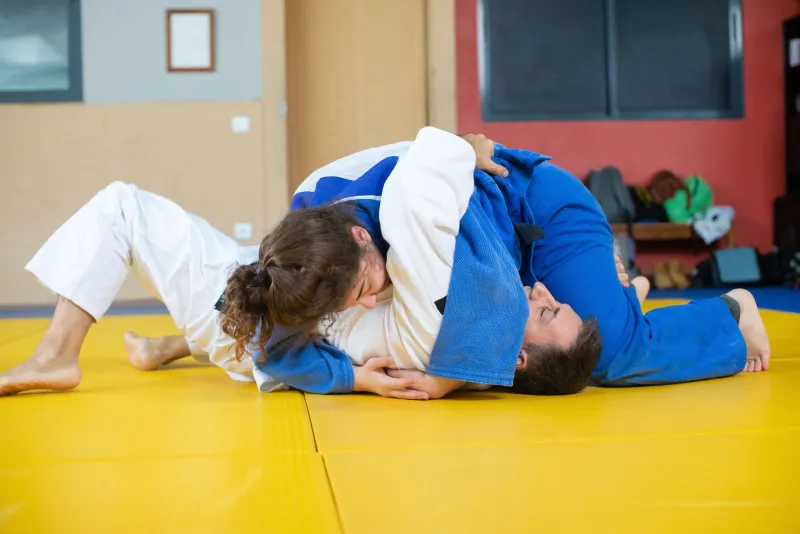
Most self-defence classes quietly arrange the room by size. You drill with someone roughly your height, roughly your weight, roughly your reach. It’s sensible for learning, but it can leave you with a false picture of what happens when the person in front of you is a foot taller and several stone heavier. The size gap is real. Technique matters, but technique on its own is not a magic trick. What closes the gap is strategy: better positioning, smarter targets, room awareness and a clear plan to get out.
Start with the honest maths
If someone is taller, they usually have longer arms. If they are heavier, they can often generate more momentum and are harder to move. If they are stronger, force-on-force grappling is a bad bargain. None of that means you are helpless. It means you stop trying to win the contest they are built to win. You are not there to out-punch a bigger person or prove you can take a hit. You are there to create a window and leave through it.
The moment you accept that, training gets more useful. You stop looking for a secret strike and start looking for angles, barriers and exits.
Base before brilliance
A lot of panic comes from being off-balance. If you are upright, narrow and leaning forward, a bigger person can move you with surprisingly little effort. So build a base first. Feet wider than your hips, knees soft, weight centred. Think of lowering your centre of gravity rather than crouching into a ball. A stable base makes it harder for someone to walk you backwards or pull you off your feet.
If you are near a wall, a doorframe or a solid piece of furniture, use it. A doorframe can become a frame for your forearms. A wall at your back stops you being dragged backwards, though it can also trap you, so keep an exit line in mind. A chair, a bin, a table or a buggy can buy a second or two. That second is often the difference between a scuffle and an escape.
Pick targets, not contests
When the size gap is significant, target selection matters more than power. You are not trying to win rounds. You are trying to interrupt, create space and get away. Eyes, throat, groin, knees and shins are common targets because they do not care how tall someone is. A sharp stamp to the shin or a knee to the thigh can disrupt balance. An open-hand strike to the face can make someone flinch and reset. A straight fingers-to-eyes motion — rehearsed safely in training, never actually poked in drills — can create a reaction.
What you are looking for is not a knockout. It is a moment where their attention drops, their grip loosens or their feet stop moving forward. Take that moment and move. Shout, strike, step off the line, go. Do not stay to admire your work.
Break the grip, not the person
A taller, heavier attacker often wants to close distance and hold on. If they have hold of your wrist, your sleeve, your bag strap or your jacket, your first job is not to punch them with the other hand. Your first job is to break the grip and move. Rotate your arm towards the weakest part of their grip — usually the thumb side — and pull with your whole body, not just your arm. Step back or to the side as you do it. If clothing is grabbed, you may need to turn into the hold, strip the fabric or slip out of a loose layer rather than tug-of-war with someone stronger.
This is why grip-breaking drills are so valuable. They are repetitive, unglamorous and genuinely useful. Practise slowly with a partner, then add resistance, then add a step and an exit. The aim is to make release and retreat one movement, not two separate decisions.
Use the room like it’s part of your toolkit
In a real incident, the space around you is not neutral. A hallway gives you a doorframe to push off. A kitchen gives you a table between you and someone else. A stairwell gives you height and a barrier, though it also brings fall risks. A busy street gives you witnesses, cars, shop doorways and people. None of this is a martial arts move, but it is all self-defence.
When you train, walk through those spaces. Ask yourself: where are the exits? What could I put between us? Where would I not want to be cornered? This is especially useful for UK homes with narrow hallways and front doors that open inwards. A doorstep conversation can turn quickly; knowing where the doorframe is and how to keep your foot behind the door can matter more than knowing how to throw a punch.
Drills to rehearse with a taller partner
You do not need a 6ft 4in training partner every week, but it helps to work with one sometimes. Keep it controlled, agree the rules and use a coach. Try these:
- Reach-and-step drill: Your partner stands at a longer range and reaches towards you. You practise stepping off the line rather than leaning back. The aim is to make moving your feet the first response, not flinching.
- Frame-and-exit drill: Your partner applies gentle forward pressure. You place a forearm frame against a doorframe or wall, lower your base and slip around the side. Reset. Repeat.
- Grip-release ladder: Your partner holds your wrist or sleeve with increasing resistance. You rotate towards the thumb, step and pull free. Add a shout and an exit step.
- Target-call drill: No contact. Your partner moves slowly and you call out targets — eyes, throat, knee, shin — while stepping off line. This builds the habit of choosing a target rather than freezing.
- Base-under-pressure drill: Your partner pushes gently on your shoulders or hips. You widen your stance, soften your knees and hold your ground without stiffening your neck.
Keep sessions short. Stop if anyone is tired, cranky or losing control. The point is rehearsal, not proving toughness.
A quick word on reasonable force
In the UK, self-defence law expects force to be reasonable in the circumstances. That usually means an honestly held belief that you or someone else was about to be harmed, and force that is proportionate. It does not mean you have to wait to be hit, and it does not mean you can keep going once the threat has gone. If you can leave, leave. If you have to strike to create space, make it about escape, not punishment. This is general information, not legal advice, but it is worth knowing before you need it.
Confidence comes from options
The size gap is not something to pretend away. A bigger, heavier attacker has real advantages. But advantages are not the whole story. If you train your base, your targets, your grip releases and your exits, you give yourself options. That is what confidence looks like in practice: not the belief that you could beat anyone, but the knowledge that you have more than one way out. Train for the mismatch honestly, and you will be harder to surprise.