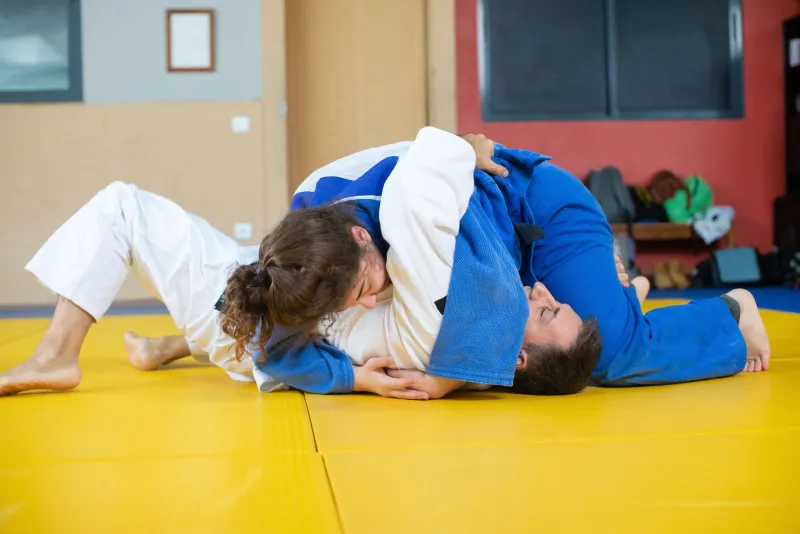
Your Body Sets the Drill: Self-Defence That Adapts Without Apologising
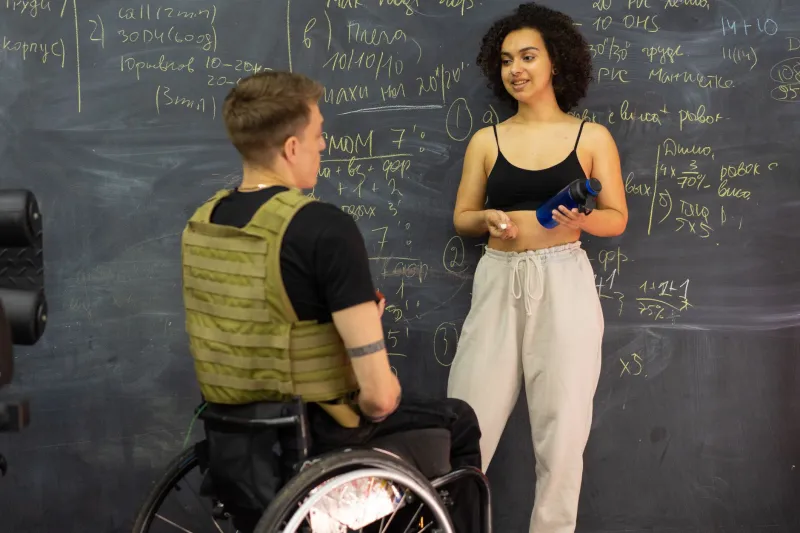
Most self-defence classes are built around a body that stands square, drops into a lunge and springs back up. If you use a wheelchair, live with chronic pain, manage fatigue or are rehabbing an injury, that template can feel like a closed door. The good news is that self-defence is not a set of moves you must reproduce exactly. It is a set of principles: make space, break contact, make noise, get to safety. Adaptation is not a watered-down version. It is the same job done with the body and equipment you actually have.
Start with the job, not the move
Before you copy any technique, name the job. Are you trying to stop someone closing distance? Break a grip? Get out of a chair? Buy two seconds to call for help? Once the job is clear, the drill can change. A standing push-away might become a seated frame: forearms up, elbows bent, weight forward, voice loud. A step-back might become a wheel turn and a brake. The principle survives; the choreography does not.
Seated and mobility-aid defences
Seated defence starts with your base. Keep your chair between you and the person if you can. Use armrests for stability, not as a magic shield. A short, sharp push from the shoulders can create distance without needing you to stand. If you use a wheelchair, practise turning the chair, using the brake and calling out in one sequence. Your chair is part of your space, not a trap.
Mobility aids are trickier. A crutch or cane can act as a barrier or a lever, but it is not a magic wand, and it can be taken from you. If you carry it every day, learn one or two controlled uses — a short block, a push to create space, a call for help — and do not build a plan around swinging it like a film prop. In the UK, using an everyday item in genuine self-defence can be reasonable, but the force still has to be necessary and proportionate in the circumstances. The same test applies whether you are standing, seated or holding a crutch.
Vet the class before you pay
Accessibility is not just a ramp at the door. Ask specific questions before you book. Is the studio step-free? Is there an accessible toilet? Are chairs available? Is there a quiet corner if you need to pause? Can the instructor show a seated version of the drill? Have they worked with disabled or chronically ill students before? Will partners be briefed, or will you have to explain your body to a stranger every week?
A good instructor will ask what you can do, not assume what you cannot. They will offer options without making you the demo. They will let you try a taster session and will not treat a request for a chair as an inconvenience. If the answer is we will figure it out on the night, that is not an accessibility plan. It is a gamble with your body and your money. You are allowed to walk away.
Pace around pain and fatigue
Self-defence training is physical, and pain and fatigue are real limits, not moral failures. Short blocks beat heroic sessions. Ten minutes of voice work and one seated frame is a valid practice. A five-minute drill before you get out of bed is valid too. Build in recovery. If your condition fluctuates, make your baseline drill small enough to do on a bad day, then add more when you have capacity.
Watch your breathing. Pain and fear can make you hold your breath, which makes everything harder. Practise one loud word — no, stop, help — while you exhale. Keep the drill simple enough that you can do it while tired. And if a movement flares your joints or sets off dizziness, stop. That is information, not defeat. A plan that only works when you are at your best is not a plan.
Reasonable force still applies
UK law on self-defence is not different because your body is different. You can use reasonable force to defend yourself, prevent crime or protect others. The force must be necessary in the moment and proportionate to the threat as you honestly believed it to be. You do not have to wait to be hit, and you do not have to retreat, but any force you use will be looked at in context. A seated push, a shouted boundary, a wheel turn towards an exit — these can all be part of a response that a court or investigator might see as reasonable. A mobility aid used as a weapon is not automatically lawful, and it is not automatically unlawful either. The question is what you genuinely believed and whether the response was proportionate.
This is not legal advice, and every situation is different. What matters for training is that you do not confuse adaptation with escalation. The aim is to get safe, not to win a fight.
Build a drill menu you can actually use
Write down three versions of the same skill: one seated, one supported standing, one free standing. Add a voice drill to all three. Practise with a trusted friend who understands your limits and will not push you past them. Rehearse the exit, the call for help and the boundary line. Then review it when your body changes. Adaptation is not a one-off. It is a habit.
Your body is not a problem to be overcome before you earn safety skills. It is the body you are defending. Train with it, not against it.